

Pâte à Croissant
Croissants have been a cornerstone of our training at the Patisserie Academy for many years. While they are often seen as one of the more technical pastries to master, we’ve proven time and again that with the right guidance, structure, and understanding, they can be made successfully and consistently. At the heart of great croissants lies baking science, from gluten development to temperature control and fermentation.
If you are interested to learn more, then my book “A Home Baker’s Guide to Food Science” might be a good idea to purchase. Have a look on our Buy Content page to learn more.
Preparation time: 4 hours 50 minutes
Baking time: 20–25 minutes
Servings: 16
Yield: ± 1 kg dough
Ingredients
500 g AP (All purpose) Flour / White Cake Flour
60 g castor sugar
10 ml salt
10 g dried yeast / 30 g fresh yeast
300 ml milk
270 g butter
Method
Dough Preparation
Sift the flour, castor sugar, salt, and dried yeast together into a mixing bowl.
Gradually add the milk and combine by hand, working the dough for about 5 minutes.*
Knead the dough well for 10 minutes, then place it in a lightly floured bowl. Cover with a clean cloth.
Leave the dough in a warm place for the first proving (pointage) for 1 hour, or until it has increased in size by about half.**
Gently flatten the dough to release as much gas as possible. Roll it into a rectangle measuring 40 cm × 20 cm, place on a tray, cover with plastic wrap, and refrigerate for 30 minutes.
Place the butter between two sheets of baking paper and roll it into a flat rectangle roughly half the size of the dough. Cover and refrigerate until firm.
Laminating Process
Lightly dust the work surface and the dough with flour. Roll the dough out to 65 cm × 20 cm, taking care not to overwork it. Keep the dough moving and lightly floured to prevent sticking.
Place the chilled butter in the centre of the dough. Fold each end of the dough over the butter, meeting in the middle. Pinch to seal. The dough should now measure approximately 20 cm × 18 cm.
With a short end facing you (butter visible), roll the dough lengthwise from top to bottom, flouring as needed.
Rotate the dough 180 degrees and roll again to 65 cm.
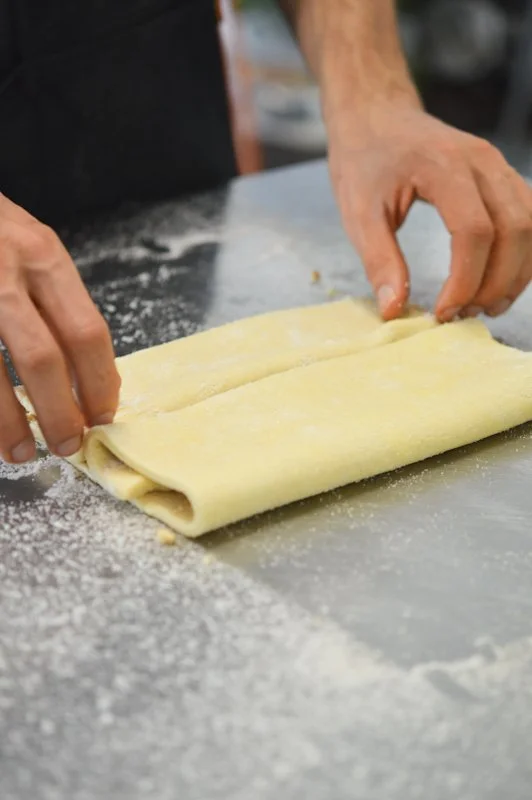
Fold one third of the dough over the centre, then fold the remaining third over the top. This completes one single turn.***
Wrap the dough in plastic and refrigerate for 1 hour.
For the final turn, perform a double (book) turn. Roll the dough slightly thinner to accommodate the extra folds.
Fold both ends of the dough into the centre, then fold in half as if closing a book.
Wrap the croissant dough in plastic and refrigerate for 1 hour before use.****
Baking Croissants
Roll out the croissant dough into a rectangle measuring
20 cm × 60 cm, about 5 mm thick.
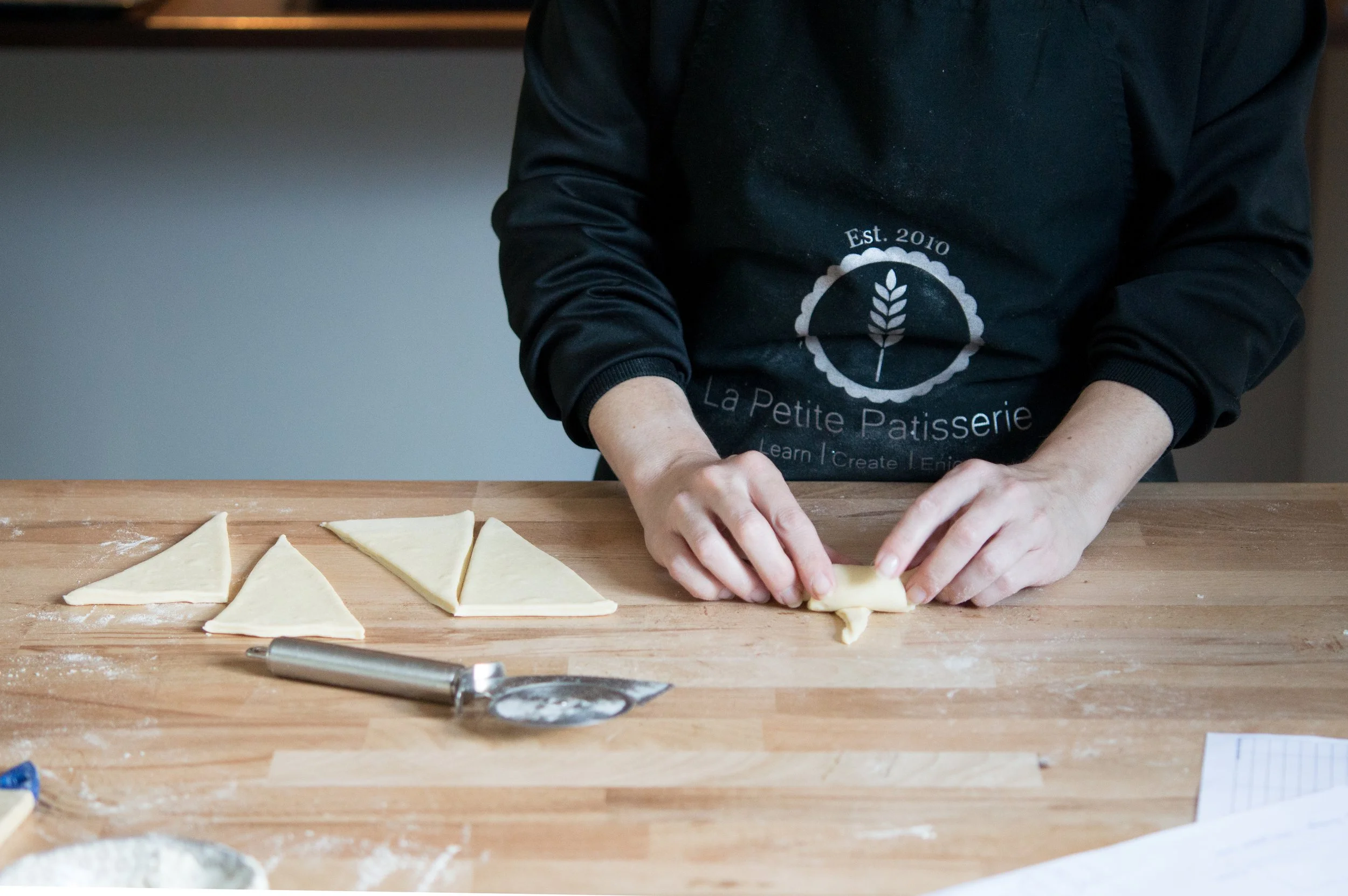
Cut into triangles approximately 20 cm long with a 10 cm base. Gently stretch each triangle by about 10% before rolling.
Roll each croissant and place on a lined baking tray, leaving 5 cm space between each one.*****
Cover with a damp cloth and leave in a warm place to proof until doubled in size, approximately 1 hour.
Brush each croissant with egg wash.
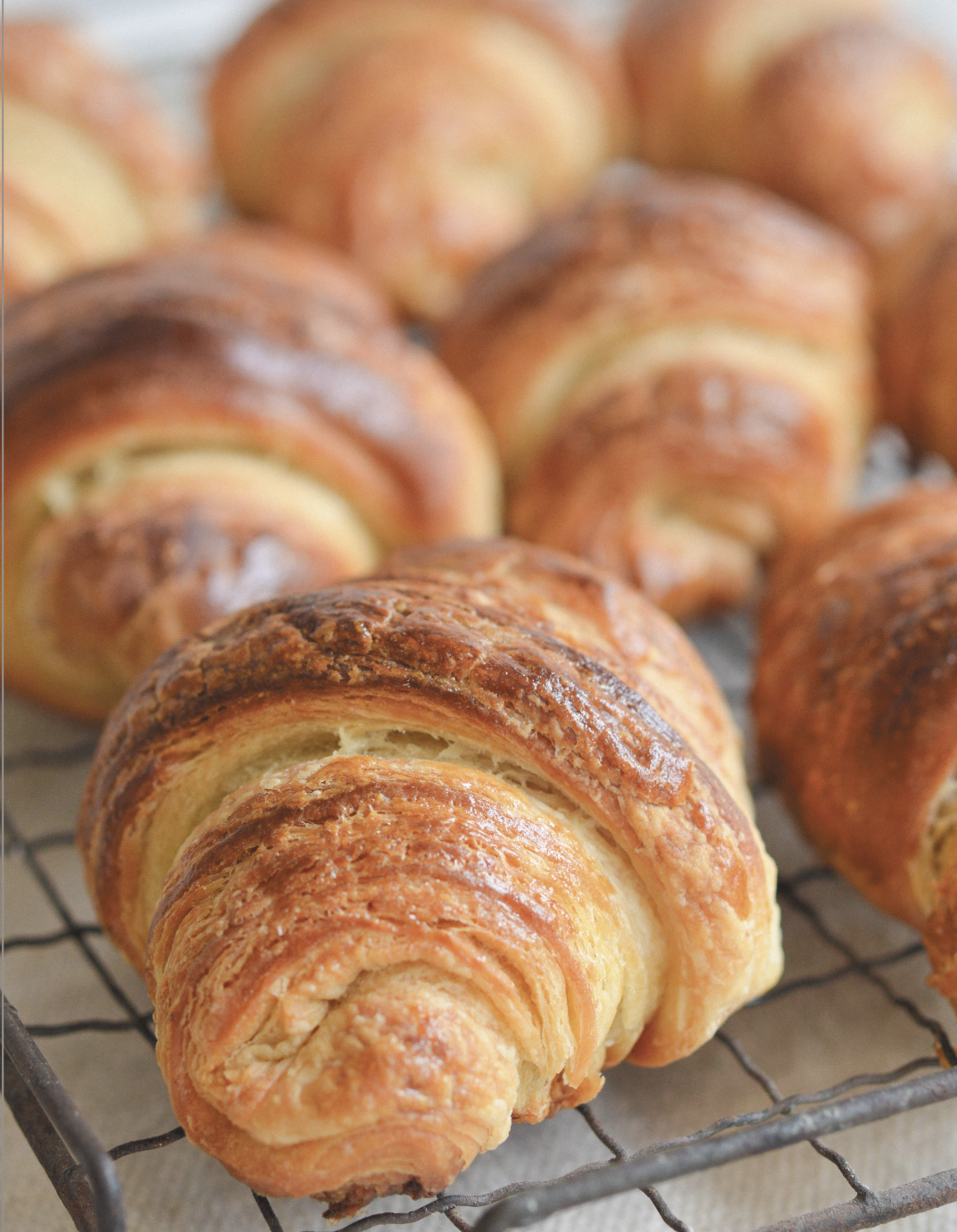
Bake at 185°C for 20–25 minutes until golden brown.
Unlike puff pastry, croissants bake at a slightly lower temperature due to the yeast-based leavening.
Notes
* Ideally, this dough should be made using a stand mixer fitted with a dough hook, as it can be quite firm to work by hand. Mix for 10 minutes, or until the dough comes away from the sides of the bowl. If the dough feels too dry, add 1–2 tablespoons of milk to soften it.
** Monitor the first proof carefully. This stage is intended only to activate the yeast. Over-proofing at this stage may result in a sour dough.
*** When turning the dough, maintain the original rectangular shape by gently stretching or rolling. This ensures even butter distribution throughout the dough.
**** Resting the dough in the refrigerator relaxes the gluten and allows the butter to firm up, which is essential for proper lamination.
***** To test if croissants are ready to bake, gently press the surface with your index finger. The dough should feel soft and elastic and slowly spring back. If it feels firm or does not recover, it is over-proofed.